
Ecosystem Superconnector
He never founded a successful startup, so how did Oo Nwoye become one of the most consequential figures in Nigerian Tech?

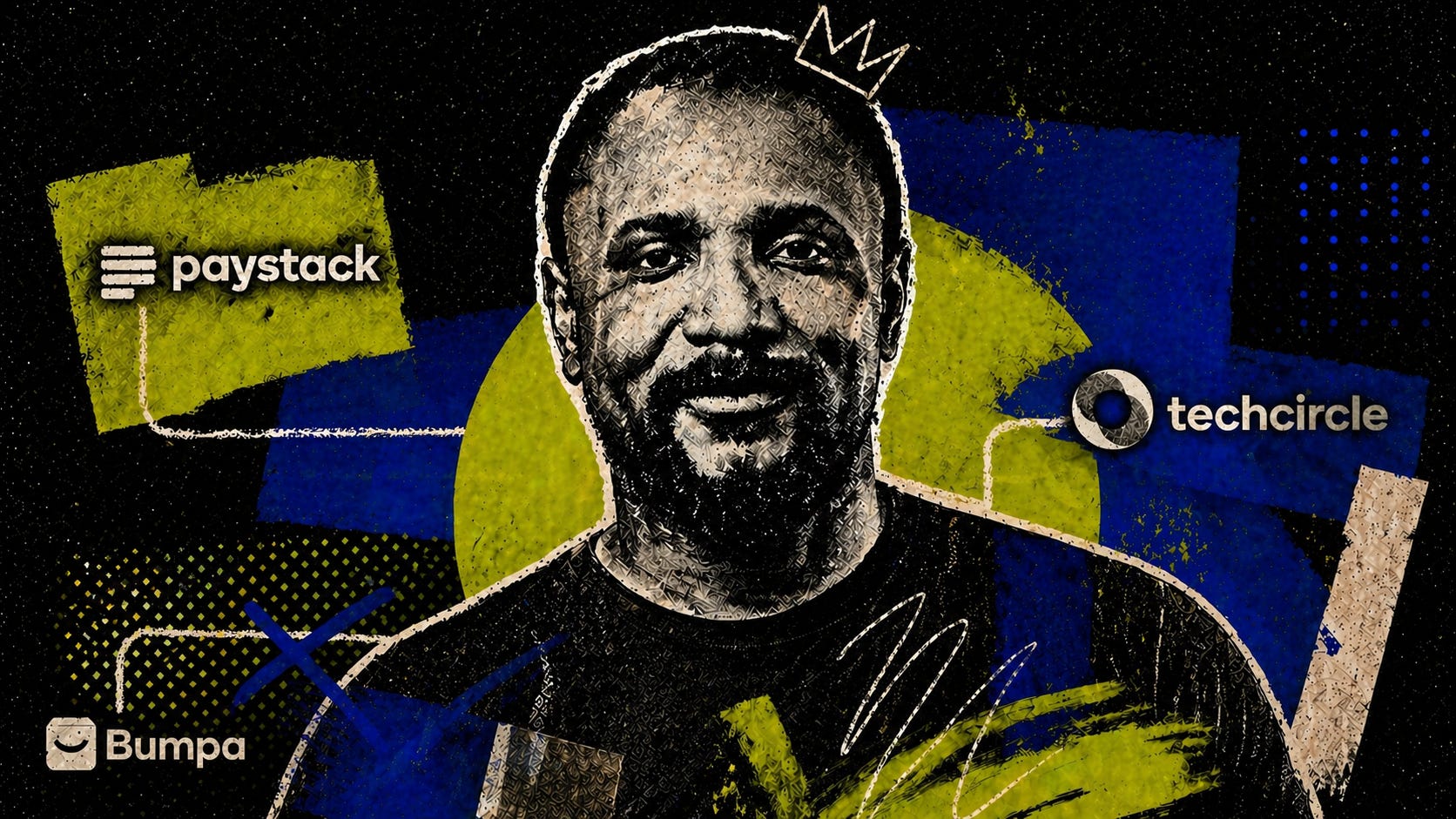
On the evening of Valentine’s Day in 2023, Oo Nwoye arrived in Nairobi. He was there to attend the Africa Tech Summit (ATS), Kenya’s premier tech conference, and to acquaint himself with the East African startup ecosystem. Tomiwa Aladekomo, CEO of Big Cabal Media, one of Nigeria’s largest digital media companies was also in town to attend the conference.
In 2021, TechCabal, one of the publications under the Big Cabal umbrella, had launched the Future of Commerce Conference, with ambitions to expand the franchise into other sector-specific events. Oo thought this was the wrong move. He believed what the Nigerian tech ecosystem needed was not smaller, specialised gatherings, but a single event large enough to bring the entire industry together in one place. Other regions already had theirs. North Africa had GITEX Morocco, South Africa had the African Tech Festival, and East Africa had ATS. West Africa had nothing of the same scale. Oo had been making this case in messages to Aladekomo for months. Nairobi was his chance to make it in person.
When the two men met on the sidelines of the summit, Oo was characteristically direct. “Are you not ambitious?” he asked. Aladekomo was pissed off, but he took the challenge. Later that year, Moonshot by TechCabal launched in Lagos, providing a stage where the continent’s founders, investors and operators could meet to take stock of the industry and plot where it was going.
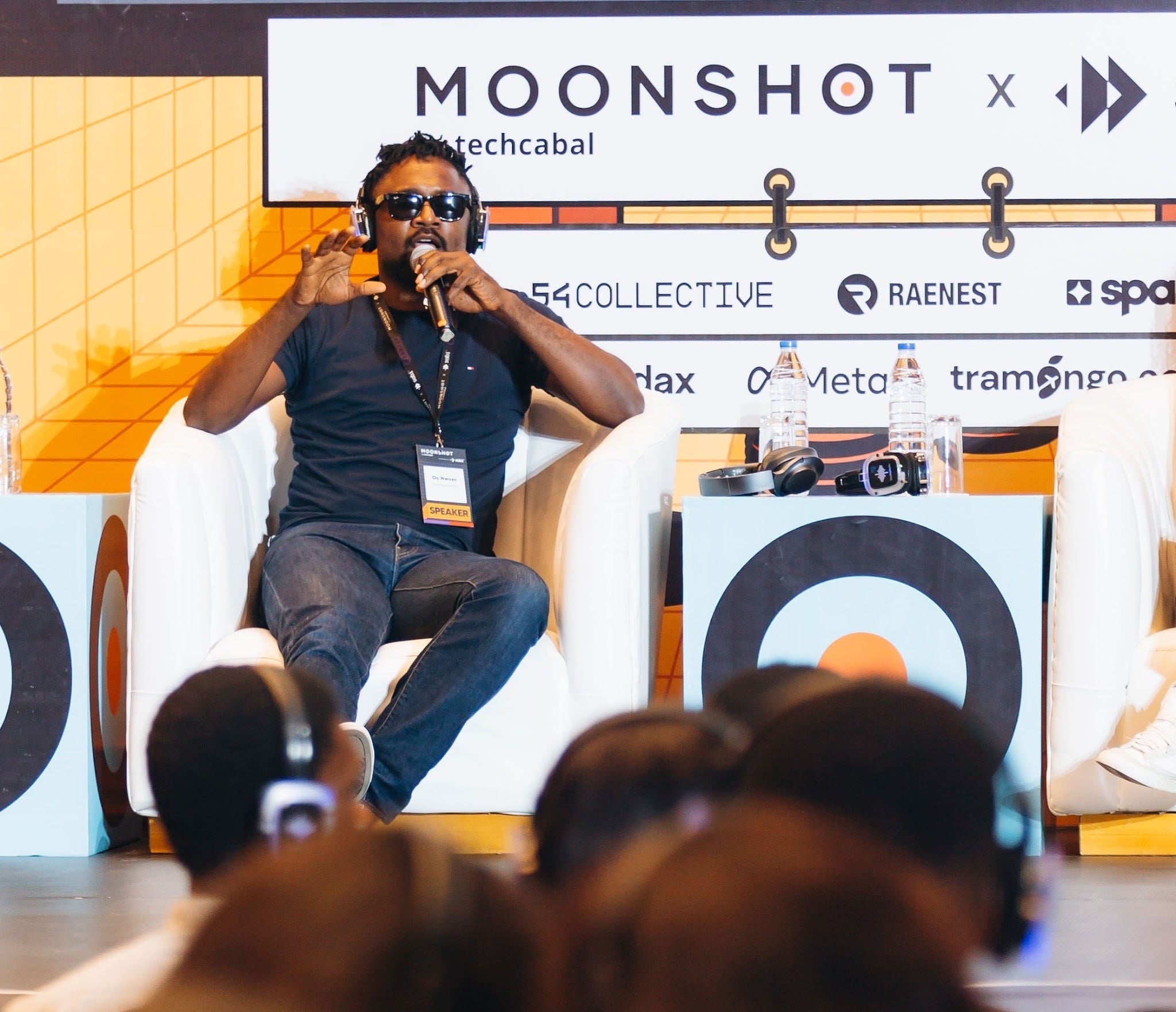
At the second edition of Moonshot, Oo was one of the speakers on that stage, on a panel alongside Fatu Ogwuche, publisher of BigTechThisWeek, Jessica Hope, founder of tech PR firm Wimbart, and Olumuyiwa Olowogboyega, TechCabal’s former Editor-in-Chief. The topic was the media’s relationship with tech startups. The industry had just come through a brutal stretch: layoffs cascading across the continent’s most celebrated startups, valuations cratering, the easy capital of the early 2020s a distant memory. In its place came scrutiny. Coverage had grown more critical and willing to interrogate not just success, but failure; mismanagement, overvaluation, and strategic missteps. It felt like a necessary correction. The guardians of a maturing ecosystem demanding accountability.
Oo thought it was a mistake. African tech media, he argued, had made a category error, importing a posture from a context that did not apply. In the United States, the tech press had spent decades as cheerleaders, becoming watchdogs only after the companies they championed grew large enough to demand scrutiny. That adversarial turn was earned, a response to scale. Nigeria was not there yet. Its ecosystem was still forming. For the press to adopt an adversarial stance now, before the ecosystem had produced companies on the scale of Meta, Amazon or Google was, in his view, premature. It risked weakening the very system it was meant to strengthen.
It was a provocative position. It was also, coming from Oo, a credible one. For over a decade, he had been a constant presence in Nigeria’s tech ecosystem, advising startups and organising tech hangouts where developers, founders, and the merely curious came together, shared ideas, argued, and occasionally started things. He had also tried to build within the system. His startup, Callbase, was the first runner-up at the inaugural TechCabal Battlefield competition. But Oo’s particular gift was not building, exactly. It was identifying the gap, naming it clearly, and pushing until something or someone moved.
This instinct manifested in some of the ecosystem’s most consequential moments. In 2016, when Paystack failed to gain entry into Y Combinator on its first attempt, Oo emailed YC executives Michael Seibel and Sam Altman directly to make a case for the startup. The following batch, Paystack became the first Nigerian startup admitted into YC, a moment that would reorder the ambitions of an entire generation of Nigerian founders. Years later in 2023, when business banking startup Brass faced a crisis that threatened a bank run, Oo was part of a consortium of investors—led by Paystack and including PiggyVest, Ventures Platform, P1 Ventures, and Olumide Soyombo—that stepped in to acquire the company and steady it.
He never founded a successful startup. But for many who did, he was present at the most critical moments in their history. How did Oo Nwoye come to occupy this particular position in the architecture of Nigerian tech? The answer begins, as most good Nigerian stories do, a long way from Lagos.
****
Oo’s childhood had the quality of a soap opera. Born in 1983 as Osita Orji Nwoye, his parents could not agree on which name to call him. So they settled on a compromise: the initials of his first and middle names. The boy has been known as Oo ever since.
His father, Professor Gregory Nwoye, taught Linguistics and African languages at the University of Benin (UNIBEN); his mother, May, was an accountant who would later rise to become the university bursar. They lived on campus in Benin City, or close enough that the difference barely mattered. UNIBEN was Oo’s world—church, school, friendships—all of it contained within the same familiar walls.
The most elite minds of his parents’ generation were in academia, many of them recruited back to the country after studying abroad, carrying the world with them when they returned. When his father returned home from a sabbatical in Japan, he brought a computer, a Toshiba laptop running DOS. No Windows, just WordPerfect and Prince of Persia, which Oo played when he was not typing documents for his father.
He attended King’s College, one of Nigeria’s most storied secondary schools. A classmate whose father ran a computer business had access, and became the channel through which Oo and his friends first experienced the internet. He would go online, print out whatever they asked for; football scores, news stories, and bring the pages back to school.
In 2000, he was admitted to the University of Benin (UNIBEN) to study electrical engineering. But UNIBEN was just a waiting room, the real destination was abroad, MIT if he had his way, though he would have settled for anywhere with a good engineering programme. While his classmates attended lectures, Oo was in cybercafés, checking foreign university websites and emailing friends who had made it to America to ask for their reading lists. He bought the books his friends were reading abroad in preparation for a future he was certain was coming. He skipped classes and accumulated carryovers. When Nigeria’s 2002 World Cup match against Argentina clashed with his Chem 104 resit exam, Oo opted to watch the match. He was, by his own admission, a terrible student, not for lack of ability, but because he had decided, with the total conviction of a young man who had never been wrong about anything yet, that none of it would matter once he got abroad.
The American embassy, however, had not been consulted on his plans. He wrote the SAT’s, scored 1,340, got admission, but was denied a visa. His second attempt met the same response. By 300 level, the dream of a foreign undergraduate degree had quietly become a plan to finish at UNIBEN and go abroad for a master’s instead. The carryovers suddenly mattered. Oo had to sit up. He went back and took the courses he had failed, attending classes with his juniors. “I went to school with my set, and the set below me. Fortunately, I did not have an extra year. I finished with a strong 2.2”
While still in school, Oo dabbled in business. The first was SAT registration; he had navigated the process himself and understood it well enough to charge others for that knowledge. He also sold mobile phones brought back from Eswatini (then Swaziland), where his father was on another sabbatical. Each venture followed the same pattern: identify a gap, step into it, extract some value, and move on. None were built to last.
The closest he came to anything resembling a tech startup while at UNIBEN was an attempt to digitise the university’s transcript system with a friend. At the time, most academic records were still handled manually. Getting a transcript was a bureaucratic ordeal, one that could take months. In 2002, SocketWorks, a company founded by Dr Aloy Chife, had started to digitise core university processes through its CollegePortal software, handling admissions, registrations, and other administrative systems. Oo’s idea was to extend that logic to the other end of the student lifecycle. If SocketWorks handled how students got into university, he would handle how they left it by digitising transcripts. The idea never got off the ground. There was no technical capacity, no structure, no team that could carry the idea beyond conversation.
Underneath all of it was a pattern of starting and not quite finishing. Oo was rarely short of ideas; if anything, he had too many. He saw opportunities everywhere, gaps in systems, inefficiencies, things that could be improved upon. What he did not yet have was the ability to see the things he started to their logical conclusion. The capacity to lock onto a single thing and push through the long, unglamorous middle stretch between idea and outcome. “I don’t think I completed half as many things as I was supposed to complete. It pains me. I know how far I would have gone if I had the ability to pursue something to the rational end.”
He described it like standing at the entrance of a maze where the path to the prize is completely visible. Not complicated, just follow left, follow right. The route is obvious to Oo in a way it is not obvious to others. He can see it from above. And yet he cannot make himself walk it. The people around him, with less vision and more discipline, simply put one foot in front of the other and collect what is waiting at the end. Oo was a visionary without the obsessive follow-through that turns vision into a company. He lacked what we have now come to know as founder mode. It was the central frustration of his life.
For his industrial training, he was assigned to a supervisor he found unnecessarily hostile. The relationship deteriorated quickly, and he was fired. The details of the firing matter less than the conclusion he drew from it: he was not going to work for anyone. His cousin ran his own architectural business, so Oo began to model himself after him. Around this time, he found Accidental Empires. Written by Robert X. Cringely, the book chronicled the early days of Silicon Valley; the personalities, the rivalries, the chaotic process by which an industry had been conjured from nothing. For Oo, it was the first time the internet had a human narrative, a space where people not entirely unlike him had built companies that reshaped the world. The book led him to Cringely’s blog, and a link on the blog led him to TechCrunch, and TechCrunch opened a door to a world he had not known existed: a place where young people were building tech companies, raising money, and disrupting industries. For Oo, all of it was incredibly intoxicating.
In 2005, he finished university and was posted to Abuja for his compulsory national service. He was assigned to Telnet, a technology company that installed VSAT satellite dishes across the country. The work took him across Northern Nigeria—Lafia, Minna, Gombe, Bauchi, Sokoto—installing the infrastructure that brought internet connectivity to banks and corporations. For a certain kind of person, it was a good job. But Oo was not that kind of person. Corporate work demanded discipline and repetition he struggled to sustain.
By the end of his NYSC year, the conclusion he had reached when he was fired from his IT placement, that he was not going to work for anyone had hardened into resolve. Oo turned his attention outward again. This time to the UK. The United States had not worked out, so all his master’s applications focused on UK universities. Around the same time, he made it onto The Intern, a Nigerian reality television show modelled loosely on The Apprentice, where contestants competed to win backing for a business idea. The programme had barely gotten off the ground when Oo received his admission letter from the University of Warwick to study Electronic Business Management. In the days before his departure, in a hotel room in Lagos where The Intern’s production was taking place, he opened a Facebook group to find his fellow tech enthusiasts in Warwick. He called it Warwick Internet Entrepreneurs. Only one person joined. His name was Joel Gascoigne.
****
Joel Gascoigne was a computer science undergraduate at Warwick in his final year when Oo arrived. He was already building something: a mobile application designed to let users share their location with friends in real time. It was an early attempt at social location-sharing, not far removed from Sam Altman’s first startup, Loopt, which operated on a similar premise.
Oo began helping out. He provided business advice while his partner handled the technology. The arrangement was reciprocal; in exchange, Gascoigne would help Oo build his own product, a single website where you could read every Nigerian newspaper in one place. “I was convinced it was going to be the next big thing.”
A few months after arriving in the UK, Oo discovered the Launch48 hackathon. The concept was simple: build a startup in 48 hours. Participants gathered on a Friday evening, pitched ideas, formed teams, and spent the weekend building, designing, coding, signing up users, and going live. A working product in two days. Oo travelled from Coventry to London for the first one in February 2009.
The idea his team worked on was Vouchacha, a location-based platform that showed users where promotions, discounts, and happy hour deals were happening nearby in real time. The founding team included Matt Collins, who conceived the idea, alongside Ben Browne, Paul Cooper, and Simon Delaney. While some built the product, others went out into the streets of London, walking into bars and restaurants to sign them up.
After Launch48, Ben Browne took over and continued building. In 2011, Vouchacha was acquired by MyVoucherCodes, the UK’s leading multichannel coupon network, with over 2,000 retailers. Three years later, British fintech Monitise acquired MyVoucherCodes for £55 million. Oo was not around for that exit. He had stopped engaging with the Vouchacha team after a few follow-up meetings. He returned to Warwick to continue working with Gascoigne, who had started building something else.
The new product was OnePage. By 2009, the internet had begun to fragment across platforms—Twitter, Facebook, blogs—each living on separate tabs. OnePage proposed to gather everything into a single page, almost like Linktree. This time, Oo was Gascoigne’s co-founder.
When TechCrunch covered OnePage, it introduced Oo to the Nigerian tech community. Nigerians from around the world began to reach out. Among them was 19-year-old Iyinoluwa Aboyeji, then a student at the University of Waterloo. “I just started using OnePage today, it is truly amazing,” he wrote. “It is inspiring to see that young Nigerians like myself can do awesome things.” Aboyeji himself would go on to do his own “awesome things,” co-founding two of Africa’s nine unicorns.
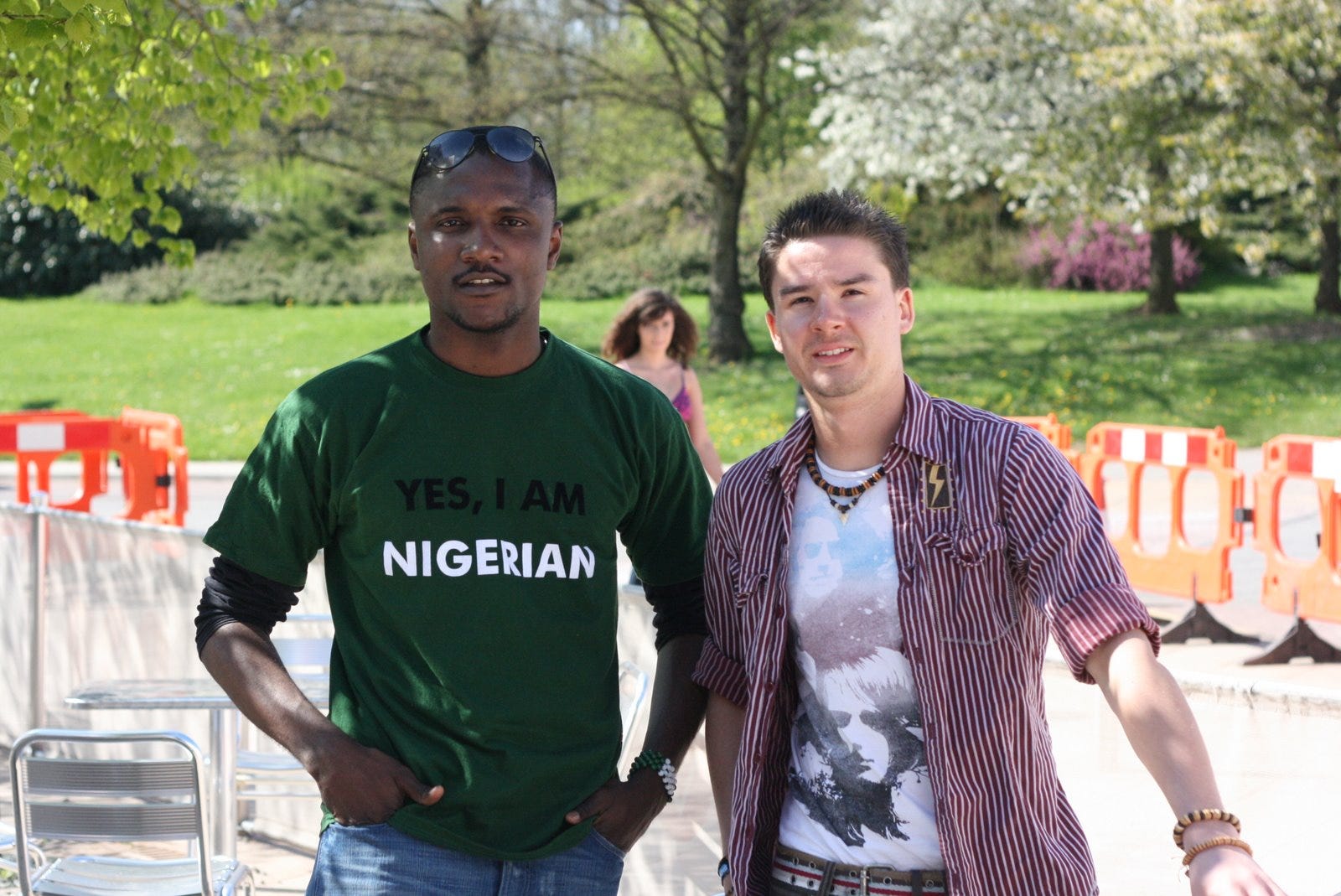
Oo and Joel Gascoigne, Courtesy Oo Nwoye
Launch48 and OnePage provided Oo his first real education in startups. Not the theoretical kind, he had gotten plenty of that from reading Paul Graham’s essays and TechCrunch, but the practical, unglamorous kind that no one writes essays about. He learnt that a good idea and a working product are two entirely different things. He learnt that the people who tell you your idea is genius are rarely the people who sign up. He learnt that timing matters, that positioning matters, and that knowing all of this in theory is completely different from knowing it in practice, the way you only can after you have failed at building a startup. Ultimately, OnePage failed.
Joel moved on to San Francisco to start the social media scheduling platform Buffer in October 2010. Oo returned to Nigeria. He arrived just in time. The Nigerian tech ecosystem was just beginning to come alive. The first real companies were forming; Paga was just a year old, and IrokoTV would launch later that year as a YouTube channel called Nollywood Love. Oo had spent two years in the UK learning how startups worked. It was time to put that education into practice.
****
By the late 2000s, Nigeria’s internet reputation had become almost entirely synonymous with scams. Young Nigerians with technical ability were turning to fraud when they could be building startups. Oo thought this was the result of a failure of imagination. While still in the UK, he published a blog post titled A Cure For Nigerian Internet Scams. In it, he argued that many internet fraudsters were “ambitious, hardworking, talented but misguided young men and women” who lacked legitimate internet success stories to aspire to. His proposed solution was “internet entrepreneurship.” What Nigeria needed, Oo argued, was an ecosystem that could redirect its youth toward building startups instead of scams. The post ended with the announcement of a new initiative he was launching: Nigerian Internet Entrepreneurs, or NigIntEnt, a community to create a support structure for Nigerian internet entrepreneurship through mentorship, education, events, and stronger connections to the global tech ecosystem.
NigIntEnt was the product of one of Oo’s most important learnings from his time in the UK startup scene. The most important things did not happen in boardrooms or at formal conferences. They happened in pubs, over pizza, and beer. What mattered most was proximity; gathering people in the same room and letting things take off from there. “In the UK, they just used to meet up for nothing. They’d just say, ‘Hey, let’s have pizza and beer on Thursday.’ No agenda. The agenda was whatever it was you were building.” The informality was the point. When you removed the structure, you removed the performance. People talked about what they were actually working on, what was broken, and what they actually needed. This was what Oo wanted to replicate back home.
In October 2010, the first NigIntEnt meetup took place at the bar of the Four Points by Sheraton in Lagos. Over 35 people showed up. Sim Shagaya, then CEO of E-Motion Advertising, put in ₦10,000 to support, while Shola Akinlade, who was then building Precurio, a collaborative platform for corporate organisations, put in ₦5,000.
Meanwhile, Oo continued to try things. There was Lotaar, a TV and radio guide to remind you when your favourite programmes were about to start, GBEDU.FM, an attempt at building the Spotify for African music. There was also Take A Stand, an app built for the 2011 Nigerian general elections that allowed users to publicly declare which candidate they supported. Then there was Callbase his most serious attempt yet at building a startup.
The company operated in the telecommunications space and had two products: Callbase, an application that allowed businesses to set up a fully functional call centre in minutes, and Fonenode, an API that enabled developers to embed voice and messaging capabilities directly into web and mobile applications. The infrastructure play was the right one, Twilio had proven the model in the United States, but the Nigerian market presented its own particular set of obstacles.
Oo applied with Callbase to Y Combinator, and made it to the interview stage. But he did not get in. The rejection hit harder than he expected. He had gone into the interview with a plan. If he got in, he would bring people with him. He would refer other Nigerian founders. When it didn’t happen, he took it personally. In the aftermath, he wrote a long email to YC partner, Michael Seibel venting his frustrations. Seibel responded. He spent close to an hour on the phone with him, explaining YC’s decision. He also made sure he was fully reimbursed for his expenses and asked him to reach out anytime. Oo did not forget, when Paystack needed it, he reached out.
Back in Lagos, Callbase began to face structural challenges. The naira-dollar devaluation of 2016 made the cost of routing calls through international network providers prohibitive. Attempts to get local telcos to provide the necessary infrastructure went nowhere, and compliance issues with regulators compounded the problem. “We built something really beautiful, but we were too early. Eventually, it just made sense to wind it down.” Opeyemi Obembe, Callbase’s co-founder and CTO, said.
While building out these projects, Oo kept hosting meetups. The NigIntEnt name was too clunky, so he rebranded to TechCircle. It became the vehicle through which Oo would do his most important ecosystem work.
Years earlier, while still applying for master’s programmes, he had also applied to a summer entrepreneurship programme at Stanford. He still has the email. Oo has all his emails, a 25+ year archive of every application, and every rejection. In the Stanford application email, he had tried to articulate his vision. “My career ambition has two components: the short and the long term. In the short term, I wish to become a successful internet entrepreneur. The long term is the pursuit of my life ambition of promoting a new cadre of Nigerian entrepreneurs through education and mentoring. For the long term ambition to be attained, the short term ambition has to be achieved.” He gave himself a deadline. By thirty, he believed he should have achieved his first ambition to build a successful startup, which would make him a millionaire in dollars. When thirty came and went, and he had not achieved that, Oo began to focus on the longer term ambition.
In 2005, American entrepreneur and executive coach Keith Ferrazzi coined the term “superconnector” in his book, Never Eat Alone. A superconnector is someone who sits at the centre of a network, linking people within the network, surfacing opportunities, and creating the conditions under which others can succeed. Ferrazzi described different types of superconnectors; among them, the lobbyist and the fundraiser. Oo began to operate in this capacity.
He became the channel through which many people first interfaced with the Nigerian tech ecosystem. In 2013, online payments in Nigeria did not work. Completing a single card transaction online could require moving through as many as six different gateways before a payment went through. Accessing Interswitch’s API reportedly required fees equivalent to nearly $1,000 upfront, followed by a waiting period that could stretch for weeks. Cards could not be stored. Recurring billing, the foundation of SaaS businesses, was nonexistent.
Oo decided to do something about it. He reached out to Akin Oyebode, then head of SME banking at Stanbic IBTC, and proposed a meeting between the bank and the tech community. His logic was straightforward: the founders understood what was broken, the bank had the infrastructure to fix it. If he could get them in the same room, something useful might happen. Oyebode agreed. Oo assembled the founders, among them Mark Essien of Hotels.ng and Shola Akinlade, who was then building Precurio, a collaboration platform for companies. While Oyebode brought Stanbic’s e-business product manager, Olugbenga Agboola, who would later co-found Flutterwave. It was the first time Akinlade and Agboola met. The two men would go on to develop a working relationship, with Akinlade being contracted to work on several payments projects at companies where Agboola worked. That work gave Akinlade access to the Mastercard payment gateway, where he first tested the product that would become Paystack.
The pattern continued. In 2016, Japanese investor Hiro Mashita, one of the early backers of Paystack, arrived in Lagos trying to understand the tech ecosystem, Oo organised a pitch competition to introduce him to promising local startups. The winner was Kangpe, a healthcare advisory app that would later evolve into Reliance Health. That same year, Oo persuaded Seibel to visit Nigeria, to see the ecosystem firsthand and encourage more founders to apply to YC. The following year, six African startups were admitted into YC’s winter batch, the largest African cohort in the accelerator’s history at the time. Five of them were Nigerian, among them Nomba, Tizeti, and Reliance Health. The pitch competition Oo had organised for Mashita, meanwhile, took on a life of its own, becoming institutionalised as Pitch2Win, an annual early-stage startup competition that would go on to spotlight companies like Curacel, Lifebank, Lendsqr, and Sendstack.
Around the same time, Ventures Platform, one of Nigeria’s earliest institutional accelerators, was trying to figure out what a homegrown accelerator programme should actually look like. The ecosystem was still young, and there were few practical playbooks that were locally grounded. Kola Aina, Ventures Platform’s founder, and Fola Olatunji-David, its first programme manager, found one reference point in a blog post Oo had written laying out how he would design an accelerator for African startups. Aina reached out, and Oo came in as an advisor.
His most consequential contribution to the accelerator was around investment structure. The Ventures Platform team had landed on $20,000 for 10% equity funding model, with payments broken into phases tied to execution targets. Oo pushed back. “He argued that if we genuinely wanted to be founder-friendly, we had to trust founders more upfront. We had to avoid creating an environment where entrepreneurs constantly felt like they were being managed through fear, conditions, or excessive controls,” Olatunji-David recalled. The simpler, cleaner structure Oo advocated for helped position Ventures Platform early on as a genuinely founder-friendly VC firm, and Oo would join the company’s board, where he served for eight years.
Oo’s instinct to organise did not always manifest in high-stakes ecosystem moments. At the end of 2015, he gathered a small group of friends for a casual get-together and roasted a whole pig. Eight of the ten people who showed up were Muslim, an oversight that became immediately obvious once the food arrived. The gathering was not a total failure; it had the loose, communal energy Oo enjoyed most. The following year, he decided to do it again, but this time as an end-of-year party for the entire tech ecosystem. He called it OyaMakeWeGroove.
The first edition was rough around the edges. About 150 people showed up. Oo’s cousin brought a chessboard. Paystack volunteered the company PlayStation. When the MC did not arrive on time, Kelvin Umechukwu, a fresh graduate who had been trying to find his footing in the Lagos tech scene, picked up the microphone and started hosting. That night, he met Maya Horgan Famodu. The encounter led to a job at her venture capital firm, Ingressive for Good. Like Pitch2win, OyaMakeWeGroove would become an annual fixture, the tech ecosystem’s Christmas party.
Alongside his community work, Oo had also begun advising startups more formally. However, he approached it differently. His girlfriend (now wife) urged him to stop giving his value away for free and start taking equity for his advisory work. It was a lesson reinforced by his earlier experience with Vouchacha, where he had given his time and expertise and walked away with nothing. It was through this arrangement that Oo came to be on the Paystack cap table. When Stripe acquired Paystack in 2020 in a deal reported to be worth $200 million, the returns gave Oo the ability to deploy early-stage capital into the startups he was advising. When Kelvin Umechukwu, the ecosystem newcomer who had hosted the first edition of OyaMakeWeGroove, decided to build Bumpa, a business management platform for small merchants akin to Shopify, Oo was one of the first checks in. “I called him and told him I was ready to go full-time on Bumpa. He didn’t ask for a pitch deck, he just sent the money.” Umechukwu said.
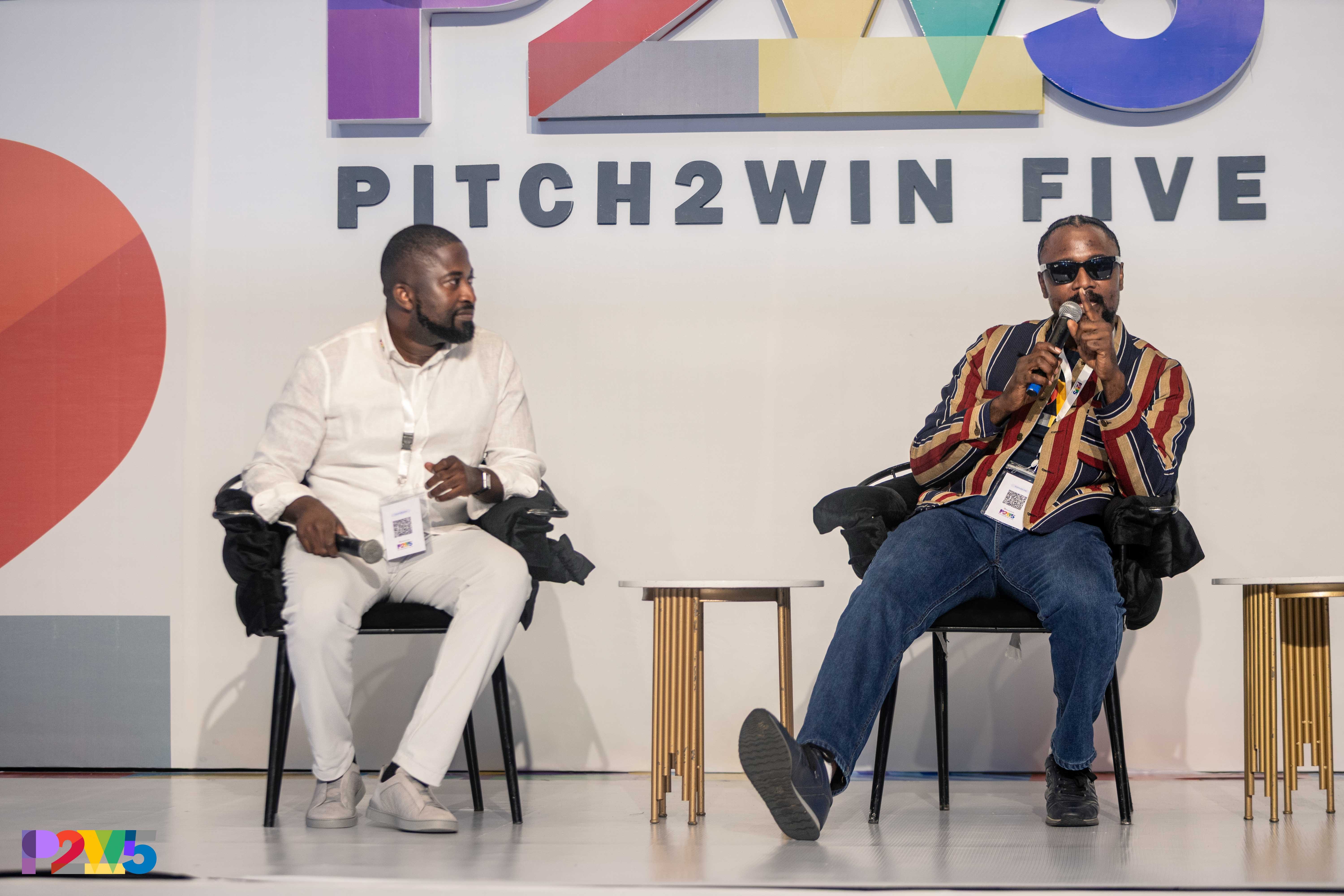
Oo Nwoye with Ridwan Olalere, CEO of Lemfi
****
At the fifth edition of Pitch2Win, Oo sat across from Ridwan Olalere, founder and CEO of Lemfi, for a fireside chat about the company’s journey from pre-seed startup to one of Africa’s fastest-growing fintechs. By then, Lemfi had raised over $85 million, processed billions in remittances, and expanded across multiple markets. Olalere began by explaining that before Lemfi existed, before the licences, fundraising rounds, and international expansion, he had first called Oo.
At the time, Olalere was still trying to figure out what exactly he wanted to build. The ideas kept changing; first a stock trading product, then a digital bank, until he settled on remittances. Oo was involved early on. He helped refine the company’s first pitch deck, introduced the founders to investors, and during the pre-seed round emailed potential investors to create urgency and reassure sceptics that Lemfi was worth betting on.
By then, this had become a familiar role. A founder with an idea. A startup at an inflection point. A fundraising round that needed momentum. A strategic decision that needed a sounding board. Somewhere in the background, often before the public knew the company existed, Oo was there.
In the audience listening to the conversation were fifteen founders competing for the Pitch2Win $10,000 grand prize. For one of them, perhaps several, the evening would mark the beginning of something consequential. But the harder work would begin after the applause. And this was where Oo usually stepped in to play his superconnector role
Author’s Note
It took a village to produce this story.
My thanks to everyone who spoke with me in the course of writing it: Kelvin Umechukwu, Opeyemi Obembe, Tomiwa Aladekomo, Fola Olatunji David. and Oo, who generously sat down with me five times over the past three months to talk through his life and work.
Apart from the Founder’s Connect team, Olumuyiwa Olowogboyega, Daniel Adeyemi, and Boluwatife Akindele provided thoughtful feedback which helped shape the story. And Samson Toromade edited the story. I’m grateful to them.
A quick note from our partner
If you’re building a career or a life across borders, every naira, shilling, or cedi counts. Sendwave makes it easy to send money from the US, UK, and Canada to Nigeria, Kenya, and Ghana. Fast and easy. All you need to do is link your debit card, verify your identity, and you’re ready to go.
You also get real-time updates so you can track your transfer every step of the way. Sendwave is trusted by over a million users, and once you try it, you’ll see why.
Use the code FoundersConnect when you make your first transfer from the US, UK, or Canada to Nigeria or Kenya, and you’ll get $10 or £10 on that transfer when you send a minimum of $10 or £10.

One of the best things I've read this year. OO spent some time giving me insightful advice last year, after introducing me to some investors. He has truly earned his title as a Superconnector.
This was a great read. I have always admired Oo and wondered how he became so significant and supportive of the ecosystem. It was good to get a glimpse of it through this.
Thank you.